Monday, 23 October 2017

Father and son teams square off in final

Victoria Park Tennis members – old and new - turned out in their numbers on Sunday morning to watch the finals of the club championships which produced some of the best tennis seen on the courts in years.


The men’s doubles was undoubtedly the highlight of the day’s play when father and son team Peter and Michael Sale took on rival family pair, Brian and Tristan Turner. The Sales, who were the obvious favourites to win the title, only managed to narrowly defeat a resilient Turner outfit 4-6, 6-3, 10-8.  

Michael said it was rather historic to have two father and son couples competing for the trophy.
“It was a special moment to win the doubles title with my father, and it was just wonderful to see the championships revived again,” he added.


Tristan played his socks off in an equally close singles final against the number one seed Jacques Jenner. After losing the first set, the latter managed to fight back and pull off a win in the deciding championship tie-breaker 4-6, 6-3, 10-5. 


In the mixed doubles event, Tristan was finally victorious with his mother, Jayne Turner, when they overcame Peter Sale and Lynne Neubert in just two sets. The match seemed much closer in score, however, with both teams showing off their serve and volley prowess.


In the women’s doubles final, Jayne and her partner, South African sporting legend Lynette Vermaak, were victorious against seasoned opponents Lynne Neubert and Leonie Grondel. Once again, the score of 6-1, 6-3 did not reflect how close the match was, with “oohs” and “aahs” coming from the spectators in the stands.

Jayne also took home the singles trophy after defeating Neubert in the howling gale a day earlier. She admitted she was grateful to still be able to play in all three events, but that she had her work cut out for her playing against the younger and harder-hitting Neubert.


Guest of honour, John Montgomery, whose name appears in gold on the winners’ board several times in all three championship events, presented the cups to the winners.

“This was an immensely pleasing afternoon of tennis. It’s great to see that the standard of play is still so high, and the enthusiasm still remains,” he said.


“This is a family-oriented club and I remember many wonderful years here. I was brought up here as a youngster and I brought my own children up here too.”

Montgomery’s last championship win was in the 1984 men’s doubles with former member and well-known tennis giant, Mike Spence.

VP Club Championship results

Men’s singles: J Jenner bt T Turner 4-6, 6-3, 10-5
Men’s doubles: P Sale, M Sale bt B Turner, T Turner 4-6, 6-3, 10-8
Women’s singles: J Turner bt L Neubert 6-1, 6-1
Women’s doubles: J Turner, L Vermaak bt L Neubert, L Grondel 6-1, 6-3
Mixed doubles: T Turner, J Turner bt P Sale, L Neubert 6-2, 6-3


**Parts of this article were published in Herald newspaper on October 20, 2017.

Tuesday, 6 October 2015

To India!

The Western Gate to the Taj Mahal at sunrise, Agra.

Colourful in its many religions. Colourful in its cuisine. Colourful in its clothing and costumes and decorations. Colourful in its people and its cultural and sporting views. Colourful in its chaos. If I had to choose one word to describe my experience of India so far, “colourful” would be it.

Indian and South African fans watching the T20I in Dhramshala.

There are no dull moments here. This is a place where literally anything is possible. And it is memorable and frustrating, exciting and exhausting all at the same time.

School children piling into a cycle rickshaw on the way home from school, Delhi.


It is true what some travelers say about coming to India. When you are here, you will love and hate it in equal measure. But when you leave, you’ll remember your time here, in this country of contrasts, with great fondness. As always, it’s the people you meet who make a journey worthwhile.

Making new friends from India, Israel and the UK.

The South African fans were severely outnumbered.
Some spectators were on the fence.

Sunday, 8 June 2014

The Cargo Carrier

We lurch to a sudden stop. For the third time in fifteen minutes. We’ve barely left Laos’ sleepy capital, Vientiane. At each stop, we pick up something different; another passenger, a few boxes of fruit or several crates of flavoured milk. This time, the driver’s assistant brings a large, brown box through the door and places it in the aisle near my feet. I can hear scratching coming from the box. There is something alive in there? The petite woman sitting across from me notices my alarm, grins and lifts one flap of the box with her hand. It’s the chirping that surprises me first and then the two dozen baby chicks scrambling over each other to find the light. The box is quickly closed again by a flick of her foot.

Two friends and I are on our way to Thakhek, a town near the centre of the country on the Mekong River. Our bus is run by a local company and tickets are too reasonably priced. Some of the windows are without glass. Nobody’s complaining as there is no fan or air conditioner and the missing panes provide much-needed airflow, when the bus is moving, that is.“Sabaidee! Sabaidee! Hello! Hello!” the local children shout; all smiles and waves as we drive past them, through tiny villages and herds of cattle, past rural clinics and countryside schools.

After another while, we stop for the fourth time. Street vendors hop on to ply their wares. There is an elderly woman selling ice-cold water and baguettes stuffed with pork floss, meat pate and cucumber, a tiny taste of French colonial influence. Another woman seems to be advertising some sort of natural medicine to the men on the bus. None of the female passengers are offered her product. A teenage girl is trying to get rid of her few sticks of chewing gum. The young man sitting behind me buys two sticks and offers me a piece. I am struck by the incredibly long nails on each of his ‘pinky’ fingers and the unnecessary kindness of his gesture.

We are not the only foreigners on board. Near the rear of the vehicle, sit four other backpackers. We all exchange concerned looks as the smell of burning rubber wafts through the open windows. A rusty red tool box appears from a side compartment near the front of the bus and the driver’s assistant crawls under the bus. The humidity shows on our faces and the air is thick with dust. It’s a long wait before we’re on the road again.

And it’s a short one before we stop once more. It appears to be an emergency ablution break for our driver who hurriedly jumps down from his seat, grabs the roll of toilet paper from the dashboard and heads into the bush. My friends and I share what we hope is a discreet chuckle. No one else even moves.

The local passengers appear unfazed as we hurtle around hairpin bends and swerve to miss potholes. Then, thud. Crunch. Something’s fallen from underneath the bus. The truck behind us has ridden over it. We soon learn it’s only a few boxes of banana milk and not our luggage. The undamaged cartons are swiftly retrieved by the driver’s assistant and repacked inside the bus, the salvaged but dented cartons passed out among the passengers and we are on our way again.


When next we come to a halt, it is with expectation, not disbelief, that we watch two dust-covered scooters hoisted onto the roof of our bus. It’s a smooth and polished system, this, albeit rather extraordinary in our eyes. The trip from Laos’ capital city should take four hours at most, we were told. We’ve been on the bus for over seven, my watch says. I remember the cardboard box of baby chicks. They must be hungry and thirsty. The box is gone. The man with the long fingernails is playing a game on his mobile phone and the sound is turned up loud. We have no idea where we are and have lost count of the number of stops. But no matter, we’ll soon be off again.

Wednesday, 7 May 2014

The wonder of Mr. Wong's

This blog was originally published on flightcentre.co.za on March 15th, 2014.


Nestled amidst the hustle and bustle of Mongkok, the most densely populated area on earth, you’ll find a tiny restaurant run by the most extraordinary man. His establishment needs no other marketing than word-of-mouth such is his reputation amongst his regular customers. Whenever there is a new arrival in Hong Kong, they are whisked away for an evening in the presence of the legend. “Wong’s”, as the restaurant is affectionately known amongst expats, is one of the most welcoming places to frequent. And economical too.

Mr. Wong seems to be something of a philanthropist; he loves to meet new people and hear where they hail from. He knows all the stereotypes about most countries and also some of the most arbitrary information which he will impart, whether you are interested or not. He helps the community around him. And if you, or your family, are ever desperate for somewhere to stay, Mr. Wong is your man. He may even organise a barbecue for you and your friends’ birthday celebrations.  


A birthday BBQ organised by Mr. Wong

He is an excellent host and he loves to chat. He’ll talk Thai politics or the latest Premier League scores. He’ll ask after your parents or your friends who haven’t come around for some time. He especially loves a new face. “Where are you from? Ah, Edinburgh? My brother lives there. Good place! Where are you going tonight? To the horses?” And he’ll do all this while serving you an array of deliciously simple Chinese dishes. There is always enough space for everyone who arrives, even if you have to sit out in the alley at the back. The chairs and tables seem never-ending. You can stay as long as you like and eat as much as you like. And you’ll leave paying a lot less than a hundred bucks.

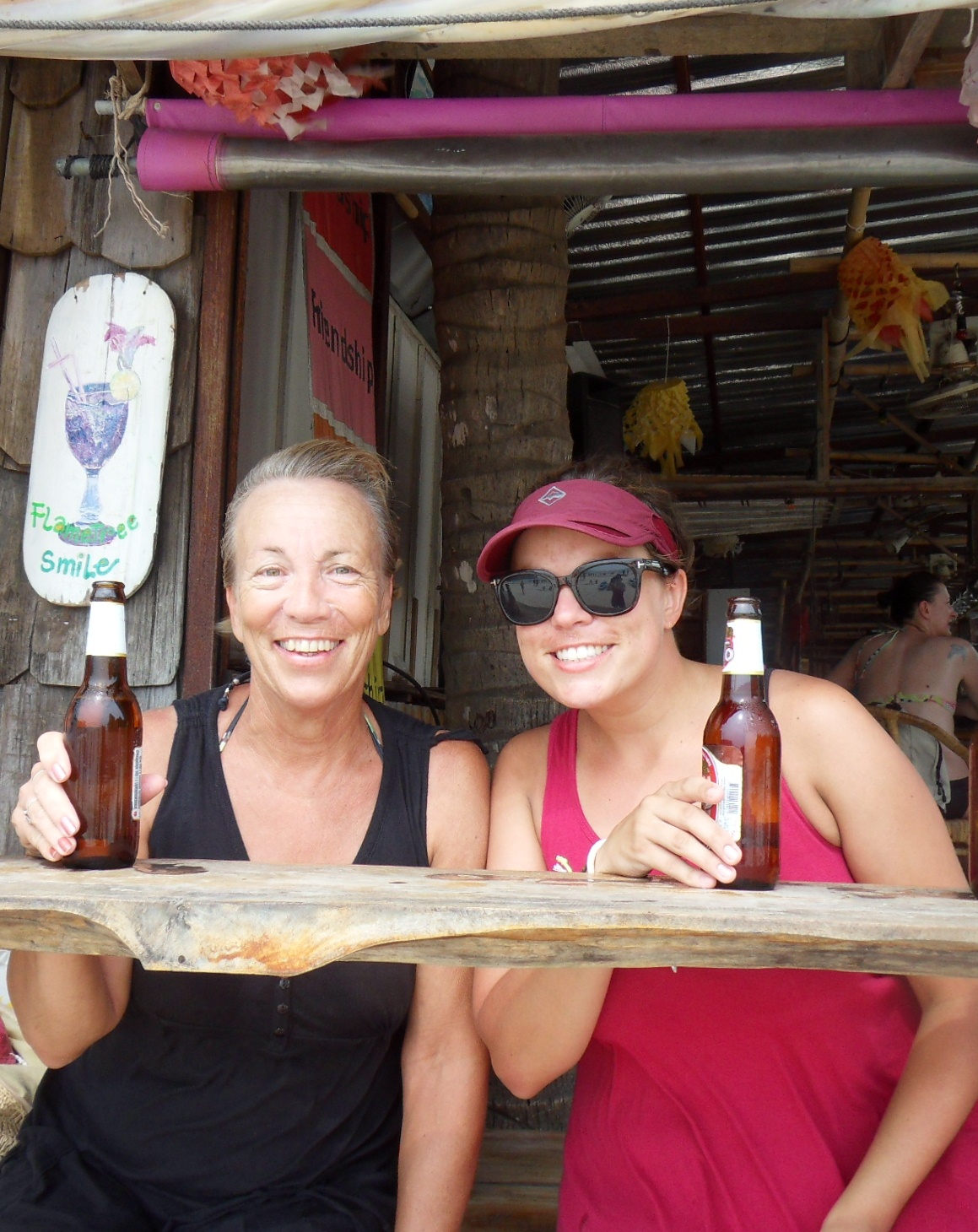
Most battle to understand his generosity; it knows no bounds. I think he just loves to see people happy. As you walk into Mr. Wong’s restaurant, you’ll look directly onto the back wall which is covered in the word “friendship” written in all the languages of his diverse customer base. If you are lucky enough to visit his apartment, you’ll be amazed at the number of postcards, photos and signed football jerseys adorning the walls from those who have lived and moved on from Hong Kong; hundreds of people thanking him for being such a memorable part of their travel experience.

I urge you: if you live in Hong Kong or if you are coming here for a visit, don’t miss out on Mr Wong’s. An evening at his tiny restaurant in the heart of Kowloon certainly promises to be a most memorable affair. And there’s little doubt that you’ll want to pass on the recommendation.


Mr. Wong with his Bafana Bafana soccer jersey.

The Selfish Elections 2014

This blog was first published on Off side or On Target on May 6th, 2014.
 
On April 30th, 2014, I went to the South African Consulate in Hong Kong and exercised my special vote in the 2014 Elections. It was and will remain one of the most important days of my life. It was and is important because it is the first democratic election in which South Africans living abroad were able to cast their vote. It was and is important because there are many expats who fully intend on returning home to South Africa and bringing their experience and talent with them.
This is also the first election in which the “born-frees” will vote. It has been twenty years since our first democratic election when the ANC came into power. There is endless rhetoric to be read about how the ruling party has failed us and how there is no good alternative opposition party. Maybe they have and maybe there isn’t. That’s for you to decide.
There is, undeniably, much to be frustrated with. However, in between all the negative politicking, the corruption and the disappointing unemployment rate, there has been much progress and growth in South Africa. Take that from someone who has been away for many years. I notice improvement every time I return home for a visit and it makes me so proud.   
As I stood in the queue in Hong Kong listening to the range of South African accents, I was overcome by a great feeling of excitement. Once I had cast my vote, that excitement turned to emotion. I had to take my tissues out. High fives, smiles and congratulations ensued whilst walking past my fellow countrymen in the queue.  
 
The 2014 Elections: the first time South African expats are permitted to vote abroad.
Picture courtesy of Sasha Andrews.
 
Sadly, my elation was short-lived when I found out how few South African expats had, in fact, filled out the VEC10 form allowing them to vote in Hong Kong. Make no mistake, I am fully aware that voting is not a duty. But it is a democratic right. And I feel it is more important today than ever to exercise that right. After all, voting is selfish. As Pieter-Dirk Uys wrote for Daily Maverick earlier in the week:
No one is honest enough to point out that voting is the most selfish act we are allowed in a democracy: to vote for ourselves. Say to the born-frees that it’s not about the rot at the top, or the pointlessness of involvement with a corrupt political game. You are voting for your future, your life, your dream. Take that vote as the key to your door to the rest of your life.  If you don’t bother to open it, you will be left behind.
So, all you registered voters in South Africa, go out tomorrow and vote. I wouldn’t dare say for who. Vote for the ANC or the DA, Malema’s EFF, the Keep It Straight and Simple Party (KISS) or whichever political party you believe will make a difference in parliament. But whatever you do, vote for what you want and hope South Africa to be. Be selfish. Vote for you.
 

Friday, 7 March 2014

Madiba: Remembering the Legend

As published on Flight Centre South Africa...

Today, 6 December, 2013, I woke up to the alarm clock on my phone as I do every other morning. I saw a message notification. I clicked on it. “Madiba’s gone…”My heart slowed down. I memorized the scene; Sham Shui Po, Hong Kong, stuffy room in a stuffy apartment, traffic noise below, construction workers shouting across the road at each other, people carrying on with their busy lives. Why have the clocks not stopped? Where are the bells? This morning is like no other.

My feelings turned to anger. I turned on the television. Obama: “He no longer belongs to us – he belongs to the ages.” Zuma: “Our nation has lost its greatest son.” I want to be at home right now. I should be at home right now; sharing in my people’s grief, celebrating the life of a legend. But instead, I am going to walk out of my apartment past thousands of people who don’t even know his name. I am going to teach little children for hours, them not knowing that today, one of the world’s greatest men has passed. I want to shout his name through the corridors and on the playground. But of course, I cannot. This morning is like any other here.


My feelings turn to gratitude. I realise now that without Madiba and the countless heroes of the apartheid struggle, I’d probably never have had the amazing opportunities to travel, to come and go freely from my country, to be tolerant of all people, to embrace each new culture with understanding and insight.


My feelings turn to pride. I am proud that I come from a country that encourages the challenging of the status quo and champions human rights and equality for all. I am proud to come from a country that allows me to be just who I want to be. I am proud of how far we have come as a people. Madiba has long been the face of our country’s pride.


Today is the day that I most want to be at home celebrating the life of my greatest hero, Nelson Mandela. But today, I know I am just where I should be. How lucky I am to be able to share his legacy with the people around me wherever I am in the world. How fortunate I am to have lived in his time. How blessed I am to be a South African.


Rest in peace, Tata Madiba. We shall never forget.
December 2013: Paying tribute to Madiba at the top of Lion's Head, Cape Town.

Sunday, 21 July 2013

Singapore Slinging

February 28th - March 5th, 2013

Singapore, the modern land of tantalising cuisine, diversity and clean streets, promises the adventurous traveller so much. It is without doubt, however, that Singapore is a country for the wealthy, especially if you are holidaying there. The cost of living is rising all the time and the materialistic culture is evident everywhere you look in the windows of Louis Vuitton and Prada stores, with the queues of eager shoppers waiting outside. 

Backpacking, certainly, is not quite as affordable as it is in other south-east Asian countries. Transport, food, accommodation and entertainment are all rather expensive. And many say that besides dining, shopping and going to the cinema, there is not much to do in this city state. Don't believe them. You can do many things on a budget, no shopping or movies included at all.

Take a leisurely walk along the water at Marina Bay and pop into the mall to do a little window shopping while enjoying the relief of the air conditioner. 

The Botanic Gardens are a visual and sensual treat for any nature lover. The grounds are exquisitely designed and there is certainly something for everyone, from healing and children's gardens to the well-know National Orchid Garden. But one could simply spend the day on the beautiful lawns with a picnic and a frisbee. 

Dress up (or don't) and visit the Long Bar at the Raffles Hotel, home to the original Singapore Sling cocktail and well-known for the tradition of throwing peanut shells to the floor. The Sling is very expensive for a backpacker or someone on a budget but one can certainly eat one's weight in roasted peanuts which could be seen as a big plus. 


Enjoy a rather expensive Singapore Sling at the Long Bar, Raffles Hotel.
The Singapore Zoo is a most impressive place and well worth the entry price. Those who worry about how animals are treated in zoos may be surprised at the system in place. Animals are given as much freedom as possible, it seems, and the grounds are clean and well-maintained. One can see animals, insects, reptiles and bird life from all corners of the globe and learn a lot about conservation and the prevention of some species' extinction at the same time.


The Singapore zoo is a fun and educational outing for people of all ages.
For many, food is Singapore's biggest attraction. Because it is a country of such diversity, one can find culinary delights from all over the world. You'll find the best value for money at hawkers markets. Lau Pa Sat Festival Market in Raffles Square offers nearly every kind of international cuisine at affordable prices.

Don't forget Sentosa Island, a big and expensive tourist attraction where you can see the aquarium and a pink dolphin show. You can even swim with the beautiful creatures if you are willing to pay the price. China and India Town are areas of remarkable culture and ethnic diversity, red lanterns, hawker shops, familiar food smells and Tiger Beer umbrellas. Arab Street boasts the magnificent Sultan Mosque and lovely little streets lined with several fantastic eateries.

The dolphin show at Sentosa Island.
It must be said that not all Singaporeans live a life of luxury. Like any big Asian cities, one moves from modesty to extravagance in just a few subway stops, one travels through areas of grimy buildings to business centres with glass skyscrapers towering above, one sees "ordinary-looking" people in the streets and then suddenly there are supermodels walking past.

One thing to be careful of when planning your trip to Singapore is choosing your accommodation well. Even if you are backpacking, don't go for the cheapest hostel option, as you might just end up staying in a rather strange area or the red light district even. It might be worthwhile to spend a little extra and find a hostel or budget hotel with good reviews and ratings. 

Singapore certainly lives up to its reputation of a rule-driven state. There are fines for so many actions acceptable in other countries, from eating and drinking in train stations or chewing gum in public to carrying the durian fruit (which has a most pungent smell). But all these rules and regulations maintain the safety, security, organisation and cleanliness of the country. Do be careful to be aware of the rules, so you do not end up paying a $500 fine for taking a sip of water on a train platform, for example.

Whatever your travel expectations and budget, Singapore has much to offer in culture, history and experience and is well worth a visit.

Sunday, 12 May 2013

An (un)fortunate series of events: Jayne and Pippa on tour

I had been anticipating and planning Mom's visit for months. In fact, even though the rest of my south-east Asia travel with friends has been "plan-as-we-go" and on a serious budget, I'd made a concerted effort to have a basic schedule for each day of the short two weeks Mom was with me. I researched the best routes and accommodation areas and gathered information from friends who had done the same trips before. I sent Mom email upon email of travel tips and reading preparation. Sometimes, however, all the planning in the world does not help. Before Mom even arrived, things started to go a little awry. 

I went to the Hua Lamphong train station in Bangkok a few days early to book a scenic day train and bus to Krabi, in the south of Thailand, so that we could enjoy a bit of the Thai countryside. What I'd failed to notice while doing all that previous research was the major fact that it was Thai New Year. And over Thai New Year, Thai people travel. Bigtime. Needless to say, there were no train seats available for the day or night. There were only overnight buses, so Mom and I would have to forego our first night's accommodation in Krabi and spend it on a bus. I booked a "direct VIP bus with air conditioner", hoping it would make the experience a little more pleasant for all concerned.

Little did I know that Jayne's plane to Bangkok would be delayed by nearly seven hours. Therefore, after travelling for close to two days, I then subjected her to another uncomfortable 14 hours but not before an "interesting" attempt at a shopping day in Bangkok, being royally ripped off by a tuk-tuk driver and dropped in the middle of nowhere, a good old catch-up and a hearty lunch supplemented with several Chang beers in apology.

Lowlight: Ripped off by tuk-tuk driver
Highlight: Reunited over beer and laughs
It took very little time for Mom and I to realise that the bus was not at all VIP, nor was it direct as promised. We were also delighted to learn that some passengers had paid half the price and were travelling even further than us. Ben, a German-Kiwi seventy-year old man was our saving grace throughout our non-direct trip. At each stop, he made sure we were on the correct mode of transport at the correct time. He entertained us with stories of his extensive travel experience and his various business adventures. He is truly a remarkable man and a reminder that one is really never too old to travel. 

By the time we arrived in Krabi, we were both relieved and exhausted. We spent a splendid six days there swimming, walking, visiting the beautiful surrounding islands and beaches, eating good food, spending times with friends from South Africa (they had also completed the “VIP” bus trip which we laughed about for hours) and swimming some more.  Mom turned even browner than ever and slept better than ever. 

Highlight: Bamboo Beach, Phi Phi - magnificent water and swimming
Besides both of us suffering a few minor travel ailments, everything ran very smoothly. We even managed to fit in a Thai cooking course with Bin and Noh. We learnt so much about the country's culture as well as the delicious food. We sampled so many dishes that we inadvertently steered clear of Thai food for the rest of the trip.

Highlight: an afternoon of Thai cooking at Siam Cuisine
Both of us were devastated to leave Krabi a day early again for transport reasons. We convinced each other that it was part of the real Thai experience. It was a lengthy trip; first by bus to Surat Thani, then a long wait at the train station and lastly the sleeper train to Bangkok. Mom's period of sleeping well was over but we saw some magnificent scenery and enjoyed the cooling relief of the rain.

Lowlight: a six-hour wait at Surat Thani train station but still smiling
I had booked what I thought was a hotel on the infamous Khaosan Road for a night. We'd have easy access to some good eateries and Mom could do a bit of gift shopping and sightseeing. Our timing and my booking could not have been any worse. For one thing, it was the opening day of Songkran, the water festival held all over the country in celebration of Thai New Year. The Grand Palace and other sights were teeming with tourists and locals and absolutely none of the shopping stalls were open. What we did find were throngs of people armed with water pistols and buckets of freezing water to throw on us unsuspecting few.

As for our "hotel", it was actually a filthy hostel in a dark alleyway called Susie Walking Street. The staff was unhelpful, we had to drag our bags up 6 flights of stairs, there was cat pooh all over the corridors (tail-less cats kept appearing from all over the place) and the walls were surely made of paper. Heck, we didn't even have a basin in the bathroom.  Mom found it all rather amusing (it took me a little longer to see the funny side). We took cover at a restaurant and watched the madness unfold around us while consuming a lot of Chang beer in wet clothes. We even caught a glimpse of the Queen of the Thai royal family on her way to officially open the New Year celebrations.

We left for Cambodia early the next morning as the water festival party-goers were only going home, having done no shopping or sleeping. Looking back at Mom and I sharing the equivalent of a single bed, giggling and cursing at the couple next door having a ridiculous drunk argument for several hours, inventing ways to block out the rave music coming through the window (besides it being "closed") and dodging the cat pooh, I still can't quite believe it. One thing is for sure; Jayne is a better backpacker than I will ever be. 

I had been to Siem Reap, Cambodia, two years previously. A friend and I had stayed at Palm Garden Lodge, a lovely little guesthouse with a convenient location, quaint atmosphere, good prices and the big selling point: a pond where the fish would nibble at your feet. I found the website and booked there again for Mom and I. My friend, Bronwyn, also booked there upon my recommendation. The three of us were dropped us off at the Palm Garden Lodge. But hang on. This was not where I stayed two years ago. We checked the address and the website and sure enough, this was the guesthouse I had booked online. It had just mysteriously changed location, manager and the general ethos of the place. By now, I was a giggling-swearing mess of a human being and resigned myself to the fact that all forward thinking should be thrown out of the window. I think Mom was most upset about the lack of the fish pond.


Highlight: Fortunately, we still managed to have the fish eat our feet
The Angkor temples are something of wonder. We happened to be exploring the temples on the first day of, wait for it, Cambodian New Year. Although it was ridiculously busy, it was a fantastic experience to see how the local people celebrated with music, dancing and good food. We moved on to the capital of Phnom Penh via bus. Cambodia’s capital city was pleasantly surprising and we spent a culturally-enriching two days learning and being shocked by the country’s violent history, driving through the outskirts of the city and ambling along the wide streets of embassies, temples and government buildings decorated in gold.


Highlight: Angkor temples
Our only minor issue at our last destination was when we took our laundry to a little place on a side street. When we went back a day later to collect it, they couldn’t find our laundry at all. In fact, our bag of laundry had not been touched at all and was sitting along with the bags of rubbish ready to be thrown out. Mom and I looked at each other in disbelief and shrugged. It was nothing that a Chang beer and some hand washing could not fix.

Unfortunately, hardly any of my planning proved successful. While travelling in south-east Asia, sometimes it is better to simply go with the flow and have no set schedule at all. Fortunately, it was an unforgettable two weeks of laughs, tears, ridiculous journeys, some of the most beautiful sights in the world, more laughs, major perspiration, fresh food and fruit and too much Chang beer.

And fortunately, I have the most wonderful mother. She makes the absolute best of every situation. Not once did she complain; she simply took it all in her stride. In hindsight, we'll only laugh at all the mishaps and treasure the best memories of a most (un)fortunate series of events.

Highlight: Railay Beach, Krabi and Leo beer


Tuesday, 5 February 2013

A taste of Tokyo

"Please discover your own Tokyo and take it home with you as a precious souvenir," said the tourist brochure we picked up at our 84-bed mixed dorm capsule hostel in Akebonobashi. It was New Year's Eve and we were a Irish lass, a Scotswoman and a South African. We had no idea what Tokyo had in store for us. It proved to be a highly entertaining trip of many a fall, fail and fantastic discovery.

Japan, and especially Tokyo, is a very expensive place. Before departing, we'd decided to "see" rather than to "eat". Marian, the Irish lass and our resident Japan expert, stressed, however, that we needed to try one specific dish called okonomiyaki; a Japanese savoury pancake containing various ingredients. With our main goal in mind, we drank a highly classy can of beer in the departure lounge and hopped on an airplane with the least amount of seating space in the world.

Day 1:
We arrived in Tokyo on New Year's Eve, which was of course very exciting; the idea of bringing in the new year in a foreign land. It had to be better than the overrated, try-and-glue-your-eyes-open-'til-midnight New Year's experiences we've all had in the past. The hilarity started early on when Kerry, the sober Scotswoman, fell and rolled four times across the road parallel to our hostel, leaving bottles of Sprite in her wake.
And it got better because as soon as we had arrived in our 84-bed mixed dormitory, we made a few new friends; some Australians passing through Tokyo on the way to the ski slopes. With them, we headed to Shibuya, an area which is famous for its "scramble crossing". It is located right in front of Shibuya Station and it stops vehicles from all directions to allow pedestrians to take over the entire intersection. What did we do when the clock struck twelve? We followed the rest of the thousands and crossed the intersection several times; it was a sea of people running, skipping, New Year's kissing and bumping into policemen. It was just so much fun. We also gave numerous hugs and had photos with many a Japanese person. It was an apt start to our Tokyo adventure, some would say it was the best New Year's Eve to date.

Needless to say, we did not eat okonomiyaki on our first day. Instead, we brought in 2013 with what I thought, at the time, was the best pizza I'd ever tasted.

Happy New Year from a Scotswoman, a South African and an Irish lass!
Shibuya's "scramble intersection" on New Year's Eve. 

Japanese love and New Year's wishes.
Day 2: 
The start of 2013 did not impress all of us as much as we'd hoped. Eventually, the Irish lass, the Scotswoman, the South African and the Australians managed to head out to explore the sights and sounds of Tokyo city. Not long after leaving the hostel, we were crossing a rather intimidating main road, when we heard some hooting and shouting. The man on a scooter was pointing to something on the road behind us. It was none other than Marian's cellular device in the middle of the pedestrian crossing. 
After the fortunate rescue of the phone, we headed to Shinguku to purchase a One Day Tokunai Pass which would allow us to travel to all the tourist spots by train. Yoyogi Park, open from dawn to dusk, is beautiful and one of the few open spaces for people to meet. We came across much street food here and we even saw okonomiyaki for sale but we decided to save it as a treat for another day.

The line for Tokyo Tower was particularly long being New Year's Day. We made the decision to climb the stairs, one I still regret, as our layers of winter clothing came quickly off and we arrived, sweaty messes, at the top of the 150 metre climb to a most average daytime view and a very full, stuffy room. We also managed a brief walk through the famous Harajuku shopping street, catching a glimpse of a few women dressed in "lolita" fashion (a Japanese subculture fashion based on Victorian-era clothing).

New friends.

Marian and I at Tokyo Tower.

Day 3:
Our third day took us to a new hostel in a more cultural part of the city, Asakusa. Before heading to see the sights, we stopped at a small vending machine restaurant. We were particularly fond of these establishments as we could look at the picture, see the price and simply buy a ticket to hand into the kitchen. Absolutely no Japanese language necessary. Each meal tray came with noodles in soup as a side dish. There was little space on Level 1 of the restaurant and so we traipsed up the windy stairs to Level 2. Marian was the last of us to get her meal. I could hear her behind me saying, "I am so proud of myself. I haven't tripped." Well, she didn't trip until the very last step. The noodles and soup went flying all over the floor. I stand to be corrected but I believe the staff member who had to mop up her mess was the only really unfriendly/unhappy Japanese person we came across on our trip.

We spent a good long time in line to see Sensoji, an magnificent, ancient Buddhist temple. In fact, it is the oldest in Tokyo and today, one of the most significant.  It was particularly busy because it was still the New Year's holidays but it was worth the wait to see.

Sensoji Temple.

The crowds of Japanese and tourists alike waiting to visit Sensoji Temple. 
Asakusa also offers a great view of the Tokyo Skytree the tallest tower in the world, and is home to one of Tokyo's most recognisable modern structures; Asahi Breweries headquarters (the famous Japanese beer brand). The building boasts a giant golden flame. We all thought it looked more like a root vegetable.

Tokyo Skytree and Asahi Breweries.
In the late afternoon, we ventured to Akihabara district to wander around Electric City and the plethora of adult shops very much in open sight.

We were desperate to try okonimiyaki for dinner but had to settle for a delicious Japanese curry instead for lack of available restaurants serving it.

Day 4:
We arrived at the very well-known Tsukijishijo, home to Tsukiji fish market, just in time for a lunch of the best sushi any of us had tasted. The market is the biggest wholesale seafood and fish market in the world. Many tourists flock there to see the tuna auctions, held in the early morning. Sadly, because of the time of the year, the market was not open to the public while we were there.

The best and freshest sushi in the world served right here.

Tsujiki Market.
After our rather disappointing experience at Tokyo Tower, we headed to Roppongi, a district famous for the rich Roppongi Hills area and an active night scene. Roppongi Hills Mori Tower offers a brilliant view from the Sky Deck, far better and higher up than Tokyo Tower.

The view from Roppongi Hills Sky Deck.
A highlight was the Mori Art Museum, where Aida Makota's artworks are being exhibited. The museum brochure hails him as "one of the most noted contemporary artists in Japan today". Although much of his art is "grotesque and erotic in style, Aida's work displays an incisive critical faculty when it comes to political and historical issues" (Mori Art Museum brochure). From my very short time in Tokyo, it seems he projects much of modern Japanese society, a chaotic clash between the conservative and the 'out-there' sides of Japanese culture.

No time to even look for okonimiyaki on this day.

Day 5:
Our last day was reserved for the big trip to Fugi-Q amusement park. The Irish lass and the Scotswoman really wanted to go to the scariest haunted hospital in the world. The South African was a little hesitant and rightly so. It was frightening and it was also, sadly, the better part of the day. From then on, it went steadily downhill. We stood in a mightily long queue for two hours and fifteen minutes to participate in a Fortress challenge, only to be kicked out after 5 minutes because we didn't pass the first stage. Never mind that everything was in Japanese! The amusement park food was awful and the beer even worse. The day's saving grace was the first-class view of a snowy Mt Fuji from the park's grounds.

Mt Fuji.
We were flying very early morning, so had planned to spend the night in Narita Airport. Upon our 9pm arrival, however, we were told that Narita (an international airport for one of the busiest and biggest cities in the world) is not a 24 hour airport and no shops or restaurants were open. It seemed our dreams of an okonimiyaki last meal were lost forever. We promptly turned back and slouched on another train ride to find a hotel; our most expensive accommodation for the shortest number of hours. We found a McDonald's at 11pm and returned to the hotel to bring in midnight with mini bottles of wine, which Marian and Kerry had kindly birthday-surprised me with. 

The same Tokyo tourist brochure (which we collected at our 84-bed mixed dorm capsule hostel on the first day) also offered insight about the people of Japan which was immediately evident upon arrival: "Japan has a culture of hospitality. Offering fine service and showing consideration allow guests to enjoy safe and comfortable trip. There is neither showiness not intrusiveness; only thoughtfulness that makes guests thankful." If you have the money to make the trip, I cannot recommend Tokyo enough. The people are hospitable, the streets and buildings clean and the entertainment plentiful.

We arrived back in Pohang exhausted, no okonimiyaki eaten and a host of terrific memories; our own Tokyo discovered and a "precious souvenir" brought home.